
🎓 How to Write a Professional Research Paper: A Step-by-Step Guide
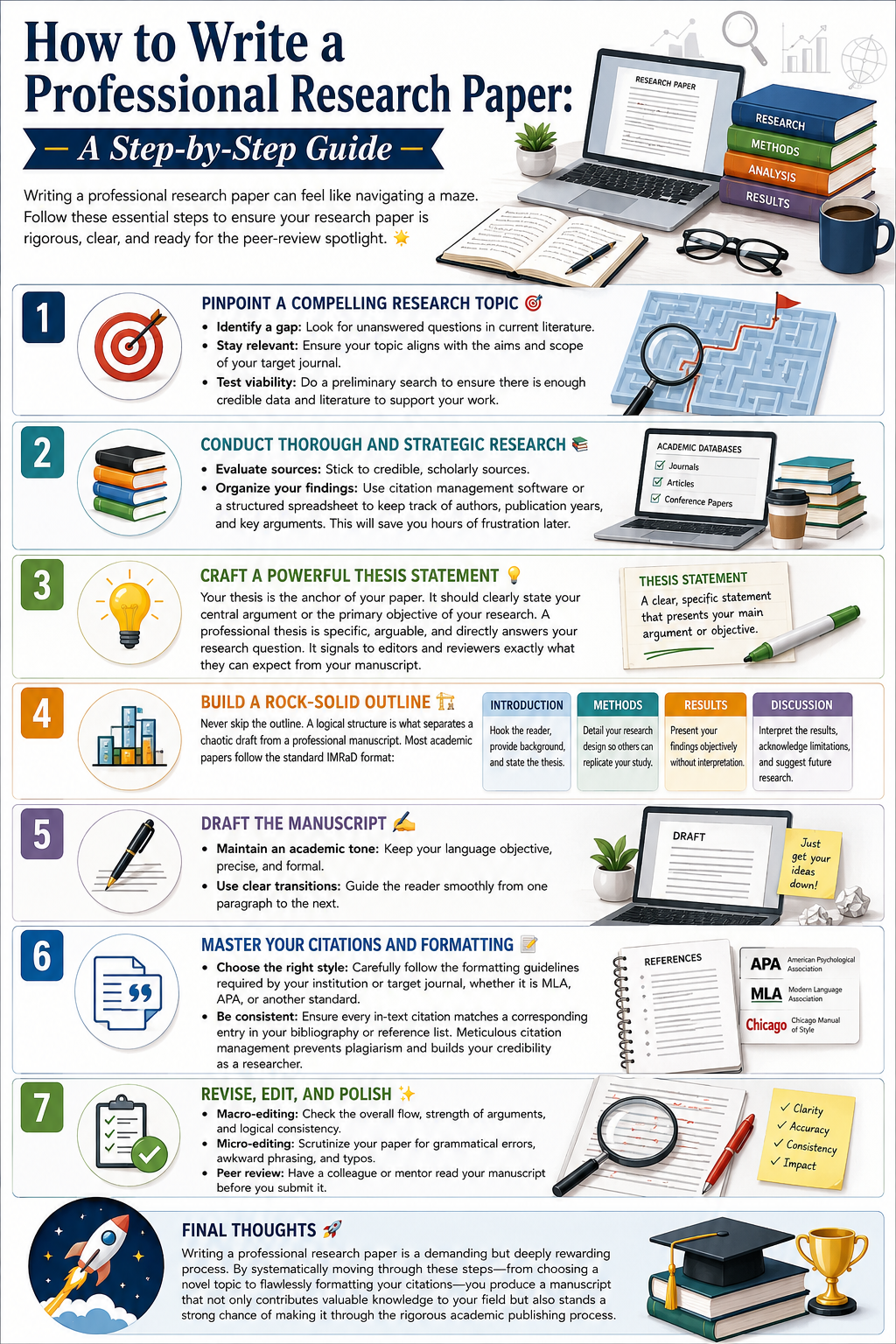
Writing a professional research paper can feel like navigating a maze. Whether you are aiming for publication in an international research journal or finalizing a major academic requirement, the path from a blank page to a polished manuscript requires strategy, discipline, and a deep understanding of academic standards.
If you want your manuscript to catch the eye of a publishing manager or an editorial board, follow these essential steps to ensure your research paper is rigorous, clear, and ready for the peer-review spotlight. 🌟
Step 1: Pinpoint a Compelling Research Topic 🎯
A strong research paper starts with a focused and original question. Avoid topics that are too broad or have been exhaustively covered unless you are bringing a completely new perspective to the table.
-
Identify a gap: Look for unanswered questions in current literature.
-
Stay relevant: Ensure your topic aligns with the aims and scope of your target journal.
-
Test viability: Do a preliminary search to ensure there is enough credible data and literature to support your work.
Step 2: Conduct Thorough and Strategic Research 📚
Before you write, you must read. Gather information from peer-reviewed journals, institutional repositories, and academic databases.
-
Evaluate sources: Stick to credible, scholarly sources.
-
Organize your findings: Use citation management software or a structured spreadsheet to keep track of authors, publication years, and key arguments. This will save you hours of frustration later.
Step 3: Craft a Powerful Thesis Statement 💡
Your thesis is the anchor of your paper. It should clearly state your central argument or the primary objective of your research. A professional thesis is specific, arguable, and directly answers your research question. It signals to editors and reviewers exactly what they can expect from your manuscript.
Step 4: Build a Rock-Solid Outline 🏗️
Never skip the outline. A logical structure is what separates a chaotic draft from a professional manuscript. Most academic papers follow the standard IMRaD format:
-
Introduction: Hook the reader, provide background, and state the thesis.
-
Methods: Detail your research design so others can replicate your study.
-
Results: Present your findings objectively without interpretation.
-
Discussion: Interpret the results, acknowledge limitations, and suggest future research.
Step 5: Draft the Manuscript ✍️
With your outline in place, start drafting. Don’t worry about perfection in the first pass; focus on getting your ideas down.
-
Maintain an academic tone: Keep your language objective, precise, and formal.
-
Use clear transitions: Guide the reader smoothly from one paragraph to the next.
Step 6: Master Your Citations and Formatting 📝
This is often where manuscripts face the most scrutiny during the editorial process. Proper attribution is non-negotiable.
-
Choose the right style: Carefully follow the formatting guidelines required by your institution or target journal, whether it is MLA, APA, or another standard.
-
Be consistent: Ensure every in-text citation matches a corresponding entry in your bibliography or reference list. Meticulous citation management prevents plagiarism and builds your credibility as a researcher.
Step 7: Revise, Edit, and Polish ✨
The first draft is never the final draft. Put your paper away for a few days, then return to it with fresh eyes.
-
Macro-editing: Check the overall flow, strength of arguments, and logical consistency.
-
Micro-editing: Scrutinize your paper for grammatical errors, awkward phrasing, and typos.
-
Peer review: Have a colleague or mentor read your manuscript before you submit it.
Final Thoughts 🚀
Writing a professional research paper is a demanding but deeply rewarding process. By systematically moving through these steps—from choosing a novel topic to flawlessly formatting your citations—you produce a manuscript that not only contributes valuable knowledge to your field but also stands a strong chance of making it through the rigorous academic publishing process.
Happy researching! 📖🔍