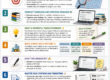
Publishing in journals indexed by Scopus and Web of Science (WoS) is a significant milestone for any PhD scholar. These databases represent the “gold standard” of academic credibility. However, their high standards often lead to rigorous peer review and high desk-rejection rates.
This guide outlines a strategic approach to writing and structuring your research paper to maximize its chances of acceptance.
1. The Pre-Writing Strategy: Journal Selection
Before you type a single word, you must identify your target. A “one-size-fits-all” manuscript rarely gets accepted in top-tier journals.
-
Align with “Aims and Scope”: Most desk rejections happen because the topic doesn’t fit the journal’s focus. Read the last two issues of your target journal to understand the “flavor” of research they prefer.
-
Check Indexing & Quartiles: Use the Scopus Source List or Web of Science Master Journal List to verify indexing. Aim for Q1 or Q2 (Quartile 1 or 2) journals if your findings are highly novel.
-
The “Statement of Novelty”: High-impact journals seek original contributions. Ask yourself: Does my work fill a specific gap, or is it just a minor extension of existing work?
2. Standardizing the IMRAD Structure
Most Scopus/WoS journals follow the IMRAD format (Introduction, Methods, Results, and Discussion).
A. Title and Abstract (The “Hook”)
-
Title: Must be concise (10–15 words) and contain searchable keywords. Avoid “A Study of…” or “Investigation into…”
-
Abstract: This is your sales pitch. It must include the problem, your unique method, key results, and the “so what?” (implications). Keep it between 150–250 words.
B. Introduction (The “Why”)
-
Establish the research gap. Don’t just list what others have done; explain what is missing.
-
Clearly state your Research Question or Hypothesis.
C. Methods (The “How”)
-
This section must provide enough detail for another researcher to replicate your study.
-
Mention specific software, sample sizes, and statistical tests (-values, scores, etc.).
D. Results and Discussion (The “What” and “So What”)
-
Results: Use high-resolution figures (300 dpi) and clear tables. Do not repeat table data in the text word-for-word.
-
Discussion: Compare your results with existing literature. Acknowledge limitations—this shows academic maturity and preempts reviewer critiques.
3. Mastering Academic Language and Ethics
Technical brilliance can be masked by poor presentation.
-
Avoid “Engrish” or Machine Translation: Use professional editing services or tools like Grammarly and Paperpal.
-
Plagiarism & Self-Plagiarism: Most journals use Turnitin or iThenticate. Ensure your similarity index is below 10–15%, and never “copy-paste” from your own previous conference papers without citation.
-
Formatting: Follow the journal’s specific style (APA, Harvard, IEEE, etc.) to the letter. Use LaTeX for complex equations to ensure professional rendering.
-
Example: For a linear regression model, present it clearly:
-
4. The Submission Package
The manuscript is only part of the process.